Beyond the Duomo: Discovering Milan's Macabre Masterpiece
Milan, a city renowned for its fashion, finance, and the magnificent Duomo, holds a fascinating secret just a stone's throw from its bustling heart. Tucked away on a quiet street, the Santuario di San Bernardino alle Ossa offers an experience unlike any other – an ossuary chapel adorned with thousands of human skulls and bones. Often described as one of the most unusual and captivating sights in the city, this solemn yet stunning sanctuary invites visitors to confront mortality and marvel at a unique artistic and historical legacy. If you're looking to delve deeper into Milan's rich, sometimes eerie, past beyond the typical tourist trails, the San Bernardino Ossuary is an absolute must-visit.
Imagine stepping into a space where the very walls whisper tales of centuries past. This isn't just a collection of macabre relics; it's a profound historical statement, a testament to life, death, and human ingenuity. Many curious travelers seeking historical relics and fascinating ossuaries, perhaps even searching for specific historical bones like "ossa san francesco," often find themselves captivated by the unique charm and mystery of San Bernardino alle Ossa. It's a place that lingers in the mind long after you've left, offering a reflective moment amidst the vibrant energy of modern Milan.
A Glimpse into the Past: The Origins of the Ossuary
The history of the Santuario di San Bernardino alle Ossa dates back to the 13th century. Originally, a hospital and a cemetery stood on this site. As Milan's population grew, particularly during periods of plague and famine, the cemetery quickly ran out of space. In 1210, a small church dedicated to San Bernardino was built adjacent to the cemetery, and a chamber was created to hold the overflow of bones exhumed from the overcrowded graves. This practical necessity eventually evolved into the elaborately decorated ossuary we see today.
While the exact origin of many of the skulls and bones remains shrouded in mystery, one prominent theory, widely accepted by historians, suggests that a significant portion belonged to victims of the devastating plagues that swept through Europe, including Milan, during the Middle Ages and Renaissance. These epidemics decimated populations, leading to an overwhelming number of deceased who needed to be interred. The ossuary served as a poignant final resting place, a collective monument to those who perished. Over centuries, the bones were arranged, not haphazardly, but with a deliberate, almost artistic intent, transforming a somber repository into a unique form of sacred art. The ossuary became a symbol of contemplation, reminding the living of their own mortality, a concept deeply ingrained in medieval and Renaissance thought.
Architectural Intrigue and Chilling Beauty
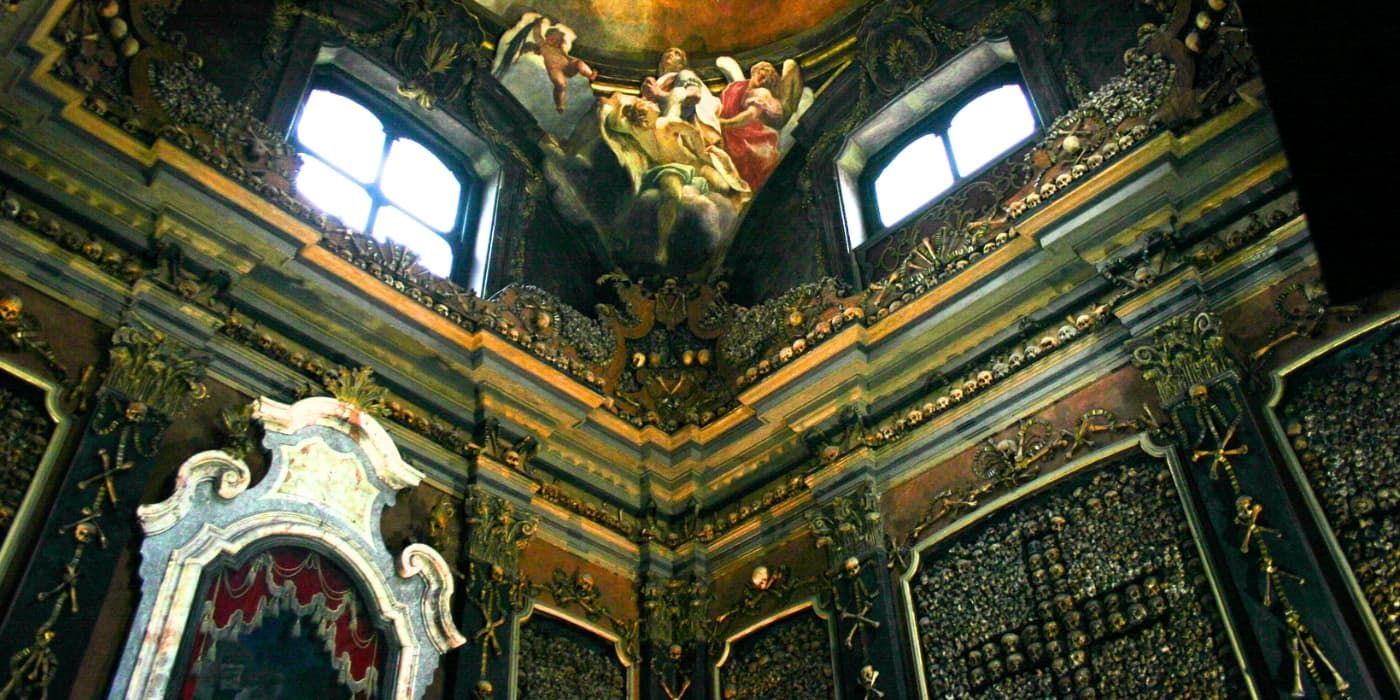
The San Bernardino alle Ossa ossuary chapel is a masterclass in Baroque decoration, albeit with a profoundly distinctive medium. Walking into the chapel, visitors are immediately struck by the sheer volume and intricate arrangement of the human remains. Skulls line the pilasters, femurs form geometric patterns on the walls, and other bones create elaborate designs on the vaults and cornices. It’s a breathtaking sight that evokes a complex mix of emotions – awe, reverence, and a touch of the macabre.
The chapel's current appearance largely dates back to the 17th and 18th centuries. The initial bone repository was enhanced after a fire in 1679 damaged the original church and ossuary. A new, grander church was rebuilt, and the ossuary chapel was expanded and decorated with even greater artistic flair. Architect Giovanni Andrea Biffi and painter Sebastiano Ricci were instrumental in giving the ossuary its current Baroque splendor. Ricci's fresco on the vault, depicting a glory of souls in paradise, offers a powerful spiritual contrast to the earthly remains below, creating a dialogue between life and death, damnation and salvation. The use of bones as decorative elements is not merely for shock value; it serves as a powerful memento mori, a reminder that death is an inevitable part of life, and a prompt for spiritual reflection. This unique blend of artistic expression and existential contemplation makes the
Milan's Hidden Gem: Discover San Bernardino alle Ossa Ossuary truly one-of-a-kind.
Planning Your Visit: Tips for an Unforgettable Experience
Visiting the Santuario di San Bernardino alle Ossa is surprisingly straightforward, given its central location. It's situated just a few minutes' walk from the iconic Duomo di Milano, making it an easy addition to your Milan itinerary.
Here are some practical tips to enhance your visit:
*
Location and Accessibility: The ossuary is located at Via Verziere, 2, 20122 Milano MI, Italy. It's very close to the Duomo and easily reachable by foot from the Duomo metro station (M1, M3 lines). Look for the inconspicuous entrance, as it's not always clearly signposted from the main street.
*
Opening Hours: While specific hours can vary, the ossuary is generally open from Monday to Saturday, usually from around 7:30 AM or 8:00 AM to 12:00 PM (noon) and then reopens from 1:00 PM to 6:00 PM. It’s often closed on Sundays. Always check the official website or a reliable local source for the most current opening times before you go, as they can change for holidays or special events.
*
Admission: Entry to the ossuary chapel is typically free, though donations are always appreciated to help maintain this historical site.
*
Dress Code: As a religious site, it's advisable to dress respectfully. Shoulders and knees should be covered.
*
Best Time to Visit: To avoid crowds, try visiting early in the morning shortly after opening or in the late afternoon. This allows for a more contemplative and intimate experience.
*
Photography: Photography is often allowed, but always check for signs or ask a staff member. Be respectful and avoid using flash, especially in a place of such solemnity.
*
Combine with Nearby Sights: Its proximity to the Duomo means you can easily combine your visit with other major attractions like the Galleria Vittorio Emanuele II, La Scala Opera House, and the Royal Palace of Milan.
Taking the time to visit this
The Bone Chapel of Milan: History and Mystery at San Bernardino provides a profound counterpoint to the city's glamorous facade, offering a unique historical and cultural immersion.
Why San Bernardino Alle Ossa Remains a Must-See
The San Bernardino Ossuary offers more than just a peculiar tourist attraction; it's a profound cultural and historical landmark. It challenges visitors to think about life, death, and the continuum of human existence. Unlike other ossuaries which might be more about sheer volume, the Milan ossuary impresses with its deliberate artistry and the sheer historical weight it carries. It stands as a silent monument to countless lives, transforming the morbid into a meditative and even beautiful experience.
For anyone traveling to Milan, adding the Santuario di San Bernardino alle Ossa to your itinerary promises an unforgettable journey into the city's hidden depths. It’s a place that transcends simple curiosity, offering a rare opportunity for introspection and a connection to centuries of Milanese history. Whether you're a history buff, an architecture enthusiast, or simply a traveler seeking unique and off-the-beaten-path experiences, the bone chapel of Milan will leave an indelible mark, reminding you that even in a city of fashion and finance, history's whispers can be the most compelling of all.
Conclusion
The Santuario di San Bernardino alle Ossa stands as a testament to Milan's multifaceted character, a city where ancient mysteries and contemporary style coexist. Far from being merely a macabre curiosity, this bone chapel offers a unique window into history, a poignant reflection on mortality, and an unexpected example of Baroque artistry. Its central location and free admission make it an accessible and essential stop for anyone wishing to explore the lesser-known, yet deeply resonant, facets of Milan. So, on your next visit to this vibrant Italian metropolis, dare to step off the beaten path and discover the fascinating, haunting beauty of the San Bernardino Ossuary – an experience that truly redefines what it means to visit Milan.